
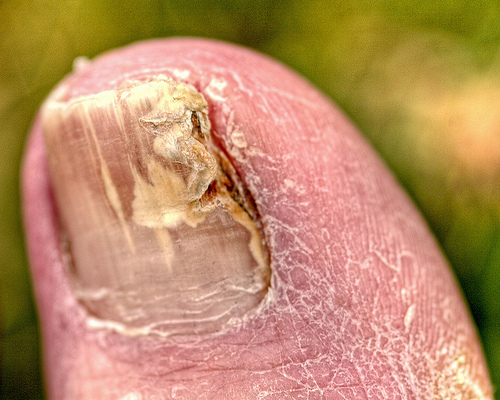
If you have Onychomycosis, the medical term for fungal infection of the nails, you have probably tried many remedies. This is a very difficult infection to treat, especially in the toenails.
You may have heard that lasers are now being used to treat fungal nail infections. This is a relatively new nail fungus treatment which has definite potential. This article should give you enough information to know whether or not you might want to seek laser therapy for your nail infection.

There are a number of ways to deal with onychomycosis. They almost always include cutting away as much of the affected nails first.
These include:
- Topical medicines – creams, ointments or lacquers applied to the toenails.
- Oral medicines – systemic therapy where the medication gets into the bloodstream and then to the nails.
- Removing most or all of the toenail, then using local therapy as the new nail grows out.
- Removing the toenail permanently by killing the toenail root.
- Using some other technique along with topical medicines to try and force the medication into the nail. This has included drilling holes and using heat.
- Alternative and complementary medications, like tea tree oil.
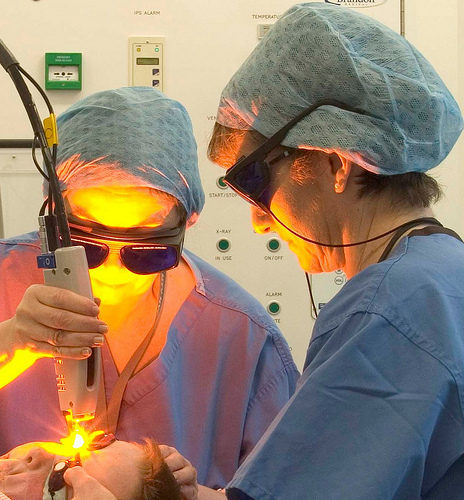
- Laser therapy, which is used to try and kill all the fungus, often along with removing as much of the thickened toenail as possible beforehand.
Each new treatment has been hailed as a potential cure, only to prove less effective than hoped, or in the case of oral medicines, potentially dangerous because of the medications’ side effects.
Many people wonder if whatever treatment they use is going to kill the fungus or just slow it down. Killing fungus is called fungicidal. Slowing it down is fungistatic. While many medications as well as lasers can kill fungus in a laboratory setting, essentially all therapy fails to kill all fungus in infected nails. That is why the infection comes back after treatment, or only improves the appearance of the nail without eliminating all traces of fungus.
Laser (Light Amplification by Stimulated Emission of Radiation) treatment
Laser is a form of light energy. The energy of the light is strengthened and sharply focused, so it can hit a narrow and specific target. When a laser beam of sufficient energy hits a target, it causes damage. Temperatures may rise at the site. This can kill funguses, and other organisms that cause disease. However, lasers do not have to produce heat to be used to treat disease. Their energy may have other specific effects.
Lasers have been in use medicine for decades. What was once thought of as a science fiction weapon or a national defense system is now used every day to treat patients. Lasers can do fine, delicate work as well as being used when a lot of energy is needed.
Some uses include:
- Surgery – cautery of blood vessels, cutting of tissues.
- Ophthalmology (eye) – treatment of retinal problems including damage from diabetes, aging, and problems due to vascular disease. Reshaping of the cornea to correct vision (LASIK surgery). This type of laser therapy must be exactly targeted and cannot cause excessive heat or anything that would damage the eye. It is very successful.
- Dermatology – Removal of many types of skin bumps and lumps, from moles and scars to tattoos. Face peels and deeper layer laser therapy to erase wrinkles and treat acne. This is an area where many different kinds of lasers are used for different problems.
- Podiatry – Used in surgery to cut through bone to fix deformities like bunions.
- Other – Lasers can “pulverize” kidney stones and gallstones.
This is by no means a comprehensive list.
Lasers and onychomycosis
To penetrate into nails, lasers need to be within a certain wavelength. The longer the laser is used, the more power reaches the tissue. The power is the amount of light energy in a period of time, delivered to a specific spot. A laser has to be powerful enough to reach the tissues needing treatment.
Most of the lasers for toenail treatment generate heat. The heat does not instantly kill fungus but causes damage that leads eventually to its death. Heat in the surrounding area is monitored and cooling systems are employed to protect adjacent tissues.
Many lasers already used in medical practice are in various stages of testing and FDA approval for treatment of onychomycosis. Lasers already in use by dermatologists or podiatrists for other procedures can be used in what is called “off-label” treatments. These devices have been determined to be safe for other conditions, and it is not illegal to use them to try and clear up nail fungus. The best laser or lasers to use have not been determined.
The Type of Lasers Used to Treat Nail Fungus
Podiatrists are the main medical professionals who take care of toenail onychomycosis because they take care of feet. They have already been using lasers to treat plantar warts and ingrown toenails, among other problems.
As recently as 2009, there were questions about the amount of research needed to know if lasers are effective for onychomycosis and whether or not enough has been done.
Doctors who already had lasers were ready to use them to treat onychomycosis even without studies proving effectiveness. Researchers investigated the results from lasers already on the market, as well as testing lasers made specifically to treat nail fungus.
Certain lasers have been shown to inhibit the growth of a number of the funguses that causes nail infection, or even kill them in the laboratory, although they have not been proven to kill all the fungus in an infected nail.
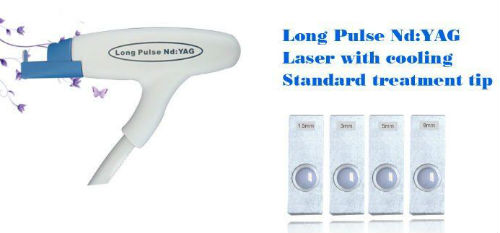
One study done with what is called a long-pulse 1064 Nd:YAG laser was published in 2010. The research doctors examined and pared down toenails suspected to have fungus, but only the patients (72) with positive fungal cultures were treated with the laser. They also pretreated the nails to make them softer. They directed the laser in a circular pattern around each affected toe, for three passes. They did a treatment every week for four weeks.
Patients were rechecked after three, six, nine and twelve months. Follow up included re-culturing for fungus. Almost 96% were negative for fungus at three months. The three patients who were positive had repeat procedures, and all patients had no fungus on culture at six and twelve months.
Most of the patients treated this way had no pain or mild pain directly after the procedure. 38% had moderate pain briefly, and none had more than that. Most of the patients experienced less pain after the subsequent treatments compared with the first treatment. The patients were satisfied with their treatment.
These researchers also applied laser energy to the fungus they grew from the patients’ nails after the first session. Significantly less fungus grew after laser treatment. However, there was still some growth in the lab after laser.
There have been a number of other studies looking at how well other types of lasers treat onychomycosis. One used a Noveon laser. This device uses different frequencies than most of the other lasers. The two wavelengths are 870 nm and 930 nm, wavelengths that are reportedly lethal to fungi and safe for the tissues of the toe.
The authors of this study, which was published in the Journal of the American Podiatric Medical Association in 2010, say that the wavelengths studied have been shown to kill toenail fungus in a laboratory setting. They also mention a concern that other wavelengths like the 1064 nm wavelength have the potential to cause mutations in adjacent cells.

This study included people with toenails that either grew fungus on culture or appeared to have fungus on a stained preparation viewed under a microscope. There were 34 patients, 25 in the treated group and 9 in a control group.
There were four treatments of each affected toe. The first was given on day one, followed by days 14, 42 and 120. There were checkups at 60 days and 180 days when samples of the nails were taken for culture and/or microscopic staining and examination. Each treatment had two parts. The first was four minutes with application of both wavelengths. The second was with the 930 nm alone for another two minutes. Treatment was interrupted if a toe got too hot.
In between treatments, patients got a topical medication called terbenafine, and were still allowed to have the nails trimmed as necessary. Control patients got the same thing except that the lasers were set at zero power.
Cultures of toes treated with lasers were negative in 75% of toenails on day 60, after three treatments. Toenail samples appeared clear on microscopic examination in 64% of cases on day 120. On day 180, 39% of toenails were negative on culture and had at least three mm of clear nail growth. There was also improvement of the appearance of the onychomycosis in the treated nails. Pictures included with the study show significant improvement in the appearance of many treated nails. As determined by examiners, the difference in clear nail growth between the treated and control nails was statistically significant.
There were no serious adverse events. Patients experienced slight tingling or heat.
These investigators concluded that the treatment was safe, at normal physiologic temperatures, and like in the laboratory, toenails could be cleared of fungus with negative cultures in 75% of the nails after three treatments. The Nomir Noveon was approved for other uses in 2007, but has not yet been FDA-approved for onychomycosis.
Long-term follow up has not been published or reported in regards to any of the lasers used on nails.
Some studies have been published in journals or online. Others have not been published, but their findings were given to the FDA to get approval. The approved lasers operate at the 1064 wavelength. Differences between devices can include timing of pulses, and whether or not cooling is simultaneously applied.
While there are these other lasers in various stages of approval for treatment of nail fungus, the following four have been approved as of 2012 for “the temporary increase of clear nail in patients with onychomycosis.”
All of the following lasers are 1064 nm Nd:YAG systems:
- PinPointe™ FootLaser™
- Q-Clear™ laser system
- CoolTouch VariaBreeze™ laser
- Cutera Genesis Plus™ laser (also has a 532nm option)
They have not proved that they can kill or eradicate onychomycosis, but the FDA is satisfied that they do improve the appearance of fungus in the nails, at least temporarily.
The 1064 nm laser passes through the nail to kill the fungus in the nail bed. There is little pain, no serious side effects, and no long-term danger such as that caused by continual oral therapy. However, none has been proven to eradicate or cure the fungal infection completely or permanently.
While doctors and investigators who prefer the Noveon laser with its lower wavelengths, citing the higher wavelengths as possible causes for mutations (thus possibly causing damage to a developing fetus or cancer), there is no evidence that this has happened.
PinPointe™ FootLaser™
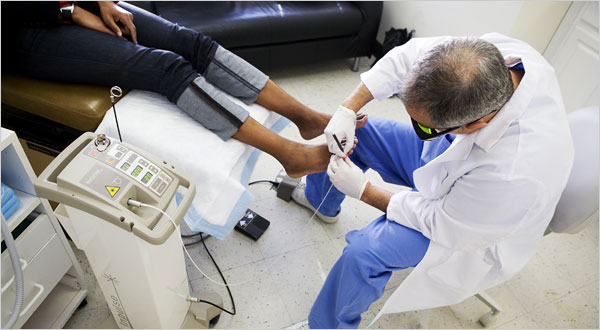
According to its manufacturers, the PinPointe FootLaser received FDA clearance for the temporary increase of clear nail in patients with onychomycosis on October 15, 2010, making it the earliest laser so designated.
The press release announcing the FDA clearance included a statement from Harvard University’s Chief of the Division of Podiatric Surgery, Dr. Adam Landsman. He said, “Toenail fungus is an incredibly embarrassing chronic condition affecting millions of people worldwide that genuinely impacts a person’s quality of life. For some with diabetes or immune disorders nail fungus can lead to serious health problems. With the clearance of the PinPointe FootLaser, patients finally have a pain-free treatment option that is more successful than topically-applied antifungal drugs, safer than oral medication, and less painful than surgical removal of the nail.”
A treatment lasts about 20 to 30 minutes. According to the manufacturer, the fungus may be killed after one treatment. The need for retreatment may occur because of reinfection from the environment. The treatment causes slight warmth, or possibly in a few patients, the sensation of a slight pinprick.
Treatment with the PinPointe FootLaser usually costs about $1,000.
Many podiatrists have given testimonials about this laser, and there have been case reports of its success. In one early trial, 87% of patients treated with this laser showed improvement.
According to an article in Podiatry Today, May 2010, early studies with the PinPointe FootLaser showed great promise.
One of the podiatrists writing this article described his own experience with the PinPointe FootLaser, which he said improved his onychomycosis, especially in the big toenail. He had no problems and believes it poses no health risks. He did this after locally applied therapy failed. While oral medicine helped, the fungus reoccurred, and he had side effects he attributed to liver or gall bladder problems.
To find a doctor in your area who uses the PinPointe FootLaser, go to this website:
https://nuvolase.com/patients/find-a-provider.
By entering your zip code you can find a local podiatrist who has this device.
Not all podiatrists or other healthcare providers list the cost of laser treatment on their website. You may have to call and ask. It is not covered by insurance. However, even when three treatments are needed, this may cost less than oral medication.
On the PinPointe FootLaser website, it is clear that this laser represents big business. A company called Cynosure has acquired the rights to distribute the laser all over the world. As of October 2011, they estimated that 100,000 treatments had already taken place. It can be used in the European Union countries, Australia and Canada.
The company’s press release says that a 12-month trial of 250 patients showed that 71.4% of the patients had continued clear nail growth after only one treatment. If clear nails can be growing for as long as twelve months, this treatment is much more successful than anything before.
Q-Clear™ Laser
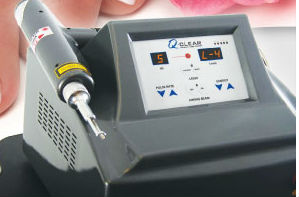
The Q-Clear™ has been used in surgery and dermatology since 2003. It received FDA approval for treatment of onychomycosis in September of 2011. At that time, the FDA approval was for “the temporary increase of clear nail in patients with onychomycosis.”
While it may be able to kill fungus in the laboratory, there is frequently fungus remaining after treatment. All it takes is some remaining fungus to eventually cause the nail to return to its pretreated state over time.
The Q-Clear is an Nd-YAG laser that delivers high pulses of energy at 1064 nanometers. It can also deliver a 532 nanometer beam which is in the visible light spectrum and green in color, but this is not what is used for onychomycosis.
The Q-clear is not as large or expensive as older lasers used for other problems. It is compact and lightweight. It is also less expensive than older lasers. It is made by Light Age Inc., a company that has been making lasers for many medical applications as well as lasers used in other fields since it was founded in 1986.
The press release at that time stated: “September 28, 2011 – Light Age Inc., a Somerset, NJ based private developer and manufacturer of laser products, has received US FDA marketing approval for its Q-Clear™ laser systems for the treatment of onychomycosis. With it, fast, effective, low cost treatments can now become commonly available through dermatologists, podiatrists, and other professional healthcare providers.”
The main points are that the treatment is fast and low cost.
The company did their own study, which lasted 12 months and included patients of multiple ethnicities and both sexes. It was reported that 97% of the patients saw some clearing of their infection, with between 55% and 65% of the areas appearing clear. Light Age said that there was little to no reported pain and that all of the patients were satisfied. They also said, “…Q-Clear™ laser system has proven to be substantially effective in clearance of dystrophic nails having a clinically apparent diagnosis of onychomycosis.”
In this study, patients were treated once. No anesthesia was needed, taking less than five minutes per affected foot.
The Q-Clear has a red beam that allows the treating physician to precisely target the nails. The handpiece delivers the laser energy; the doctor moves the handpiece over the nails and circular beams hit the targeted area. Onychomycosis caused by all the normal fungi can be treated this way.
CoolTouch Inc. VARIABreeze ™ Laser
CoolTouch Inc. makes a laser called the VARIABreeze ™ which was approved for use on nails in November of 2011. The FDA clearance, the other 1064nm lasers, is for the temporary increase of clear nail in patients with onychomycosis. The company has been making lasers for medical uses since 1994, and has devices for treatment of skin wrinkles, varicose vein treatment, laser lipolysis (to reduce fat) and skin tightening.
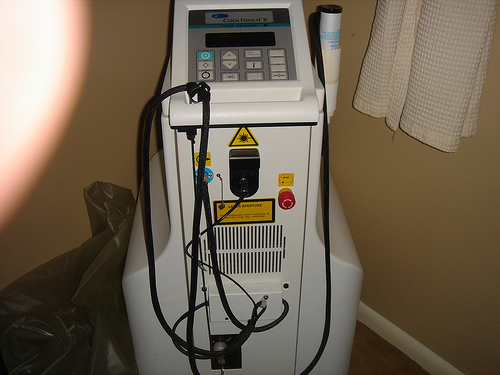
According to the company, the CoolBreeze laser procedure takes twenty minutes. Patients treated with the laser can expect to see improvement in a few weeks. The company notes that it is safer than oral medication. The company also says that it is easier to have one treatment than to apply medication every day. CoolTouch describes their laser treatment as “…fast, safe, effective and painless…”
CoolTouch did studies on a 1320 nm, pulsed, CoolBreeze Nd:YAG laser to treat onychomycosis before their VARIABreeze laser was approved. This device is adjustable in terms of size of treated area, energy delivered, and a hand device allowing a cooling agent to be used. There may also have been studies of the VARIABreeze delivered to the FDA.
Using the older device, fifty-four toes (38 patients) that had culture-positive toenail fungal infections were treated with the laser. Toenails were treated at least two times in separate sessions with four weeks in between.
The patients in this study reported mild pain immediately after treatments. Patients were rechecked at four, twelve and twenty-six weeks after treatment. Patient satisfaction at week four was 3.4 (out of 5), at twelve weeks this number was 3.6, which is statistically significant. There was an increase in clear nail plate in 80% of the treated nails.
Only one patient reported significant pain in a big toenail; this pain was gone in two months.
The researchers for this study suggested that this laser could be used for two or three treatments, and that each treatment, even including all toenails and fingernails takes only 15 minutes. They could not determine whether or not the funguses, dermatophytes in this case, were inhibited or destroyed.
However, other researchers looked at the effects of fungus that was first wet under a vacuum or slowly cooled before being irradiated. The laser used was a CoolTouch, Q-switched, Nd:YAG laser, 1320 nm. This research showed that cooling, putting in a vacuum and using lasers can slow down the growth of the fungus. Slow cooling followed by rapid laser treatment reduced the rate of fungal growth the most. It is not entirely clear how this information can be helpful to the practicing doctor, but these kinds of studies helped companies like CoolTouch design their lasers to treat nail fungus.
One podiatrist in Sacramento, California who had been using the similar CoolBreeze laser before the CoolTouch was approved said the laser treatment was effective in 80% of cases that he treated. He says that the system monitors the temperature to make sure the tissues do not get too hot.
This doctor noted that the toenail does not become clear at the time of treatment. Once a significant amount of the fungus is killed, the new nail must grow out. Each person’s nails grow at a different rate, so that results will not become completely visible for six to twelve months. However, clear nail growing out can be visible as early as eight weeks after the procedure.
This particular doctor offers three treatments beginning at $275, which is not covered by insurance. The cost varies depending on how much nail needs to be cut back before the laser treatment. He will give patients 75% off if they need re-treatment in the future.
He also states that results are much better if you use topical treatment on the nails afterwards and make sure that there is not a good place for the fungus to regrow. For example, diabetics with high blood sugars are making a good home for fungus in the nails and need to control their blood sugar to keep nail fungus away. Topical preparations should be continued and shoes sprayed with antifungal medication.
This general advice can be applied to all laser treatments of onychomycosis.
Cutera Genesis Plus™ laser
This company received FDA approval in March 2012 for its Harmony (XL) multi-application, multi-technology platform laser system. While it is a 1064 nm Nd:YAG laser, it also has a tip (called a KTP tip) which uses a shorter wavelength of 532 nm. The company that makes this device, Alma Lasers, Inc., says that the shorter wavelengths cause tiny cavities in the nail which may help the 1064 nm laser get into the fungal colonies under the nail. The company also says that the 532 nm wavelengths are absorbed by red and brown pigment in the nail. These discolorations can be caused by fungus, and treating them with the laser may improve the appearance of the nails.
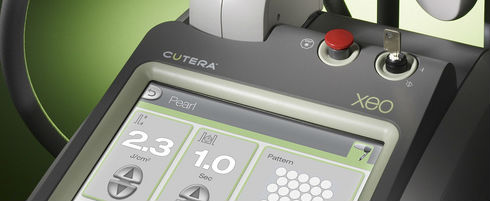
They suggest that the lower wavelengths be used first to help eliminate the discoloration of the nails and cause mechanical damage to the nail, so that the 1064 nm laser can get more effectively under the nail to the nail plate, where they say the fungus is “deactivated.”
The Genesis Plus is a free-standing, light and portable machine that can be moved from room to room.
This laser has already been approved for many skin conditions, including removing deep pigmented spots and tattoos. The two different wavelengths mean that it can remove more colors in tattoos. Black, blue and green can be removed with the 1064 nm wavelength, while red, orange and yellow can be removed with the 532 nm wavelength.
One small study was done by a podiatrist using the Cutera Genesis Plus on all the toenails of seven patients, who had culture-proven fungal nail infections. The handpiece of the device can be set to deliver as many as 100 pulses each time it is passed up and down and side to side over the nails. Each nail received four passes. The big toenail received 100 pulses. The other 4 nails received about 100 pulses together.
There were two treatments done for each patient, six weeks apart. Each session lasted about 15 to 30 minutes, again treating all the nails on each foot. No anesthetic was necessary, and there were no observed side effects.
Success was documented by the use of digital photography, high resolution, with photos taken before treatment, at week six and twelve post first treatment.
70% of the treated nails showed improvement after the two treatments. 71% of the significantly to severely affected nails showed improvement while 67% of the mild to moderately affected nails showed improvement.
This small study looked at cosmetic results only. 70% of their patients showed improvement after two laser treatments with no side effects.
The podiatrist who reported these cases charges a different amount, depending on how many nails are involved. Including evaluation, this can be $800 for five toes and $1,000 for ten toes. $100 of these charges can be billed to insurance as podiatric examinations. Follow-ups can also be charged at $50 to insurance. But the laser therapy is essentially never covered by insurance.
A second laser treatment, if needed, would only cost $100. This is at a Southern California podiatry clinic outside of Los Angeles County.
Cost of laser treatment of onychomycosis
Cost to treat nails depends on many factors including:
- How many nails are involved.
- How thick they are and how much surgical paring has to be done first.
What type of laser is used. - The area of the country you live in and the cost of medical care there in general.
- Whether or not the goal is to completely clear nails, if this is possible, as opposed to improving their appearance.
Quotes range from treatment starting at $275 to $1,100. Most people with affected toenails that have not been satisfied with conventional treatments should expect to pay around $1,000 for anywhere from one to three treatments depending on which system is used. Most podiatrists charge significantly less if there is a need for re-treatment with the laser.
Research
There is ongoing research, trying to prove the efficacy of many different lasers. Researchers want to find the best ways to use lasers to cure nail fungus. They also want results to obtain FDA approval for “the temporary increase of clear nail in patients with onychomycosis” if their system has not been approved, or to indicate it can do more than that. Ultimately laser manufacturers and doctors treating onychomycosis want to try and cure the fungal infection.
To look for clinical trials, go to this site:
Clinicaltrials.gov
and select “Basic Search.”
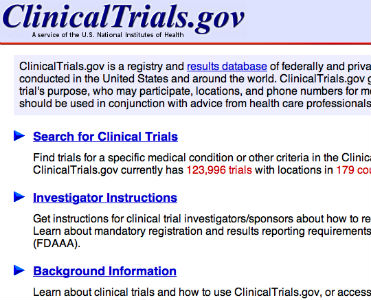
You then search for a trial by putting “laser and fungus” into the search engine, or “laser and onychomycosis.” The results frequently contain trials that are not exactly what you want, so you need to read through them. A search on March 22, 2012 yielded nine results. Two were not about lasers. One was completed but had no results reported. Two had status listed as “unknown” which can mean a variety of things but is not helpful. One trial was active but not recruiting.
A specific CoolTouch laser trial was listed, open by invitation only, and will use 15 people for a randomized, placebo-controlled study.
One recruiting trial called “Study of the V-Raser Diode Laser System in the Treatment of Onychomycosis” is recruiting participants in Connecticut. This trial is trying to establish that the particular laser works, and all the participants will be treated. If you live in Connecticut and you want to see if you meet the criteria for this study, look at the information here:
https://clinicaltrials.gov/ct2/show/NCT01452490?term=lasers+and+fungus&rank=4
One other trial was listed that will be recruiting participants but is in Brazil.
If you would like to try laser therapy for your nails but cannot afford it, you can check from time to time to see if there are any new trials in your area.
Conclusion
Laser treatment of onychomycosis is safe, causes minimal discomfort and no long-term side effects or problems. The systems have only been FDA approved for cosmetic improvement of the nails. What trials have been done support the claim that they improve the nails’ appearance and can clear areas of fungus.
No laser has been proven to eradicate fungal nail infection. Long-term effectiveness is not known. The ideal number of treatments depends on the laser system and is not definitive. One to three initial treatments are usually suggested.
It is very likely that success also depends on who is using the laser. A very experienced podiatrist who knows how to cut back as much affected nail as possible beforehand and how to use the laser system will probably get the best results.
Treatment will probably cost around $1,000 and will not be covered by insurance in most cases. Many treating doctors offer re-treatment at significantly discounted prices if it is needed.
If you can afford it, laser treatment is a very reasonable way to improve the appearance of your nails without having to apply products daily and without the danger of taking oral medication. However, it is no more likely to completely cure onychomycosis than any of the other choices currently available.
This type of laser cannot be used by cosmeticians or anyone without a medical degree. A doctor of medicine specializing in dermatology or a doctor of podiatry should have the most experience.
Research may discover a better way to use lasers in the future. At the current time, there is very little difference between the FDA-approved lasers for onychomycosis. Choosing a podiatrist that has a lot of experience may be more important than which laser is used.
Other lasers that are not FDA approved for onychomycosis can still be used to treat it, and if your podiatrist is comfortable with his or her existing laser system, it is reasonable to try it if the podiatrist has had success treating fungal infections.
References
Cynosure Acquires Worldwide Exclusive Rights to Distribute PinPointe™ FootLaser™ for Treatment of Onychomycosis. https://nuvolase.com/news-and-events/press-releases/cynosure-worldwide-distribution-rights
Light Age Inc. receives FDA approval for the treatment of onychomycosis. 10/13/2011 Light Age Inc.
https://www.medica.de/cipp/md_medica/custom/pub/content,oid,34955/lang,2/ticket,g_u_e_s_t/~/Light_Age_Inc._receives_FDA_approval_for_the_treatment_of_onychomycosis.html
https://www.podiatristsacramento.com/laser_treatment.html
Kozarev, J., Vižintin, Z. Novel Laser Therapy in Treatment of Onychomycosis. Journal of the Laser and Health Academy Vol. 2010, No.1; www.laserandhealth.com Vol. 2010, No.1;pp. 1-8.
Singer, N. False Start on a Laser Remedy for Fungus. New York Times. March 20, 2009.
501(k) Summary for the LightAge, Inc. Q-Clear™ Nd:YAG Laser from the FDA, September 15, 2011.
https://www.prnewswire.com/news-releases/new-nail-fungus-approach-receives-fda-clearance-142781615.html
Aguilar, G., Sun, F., Carlier, P., et al. Effect of vacuum and thermal shock on laser treatment of Trichophyton rubrum (toenail fungus). Photonic Therapeutics and Diagnostics VI (Proceedings Volume). February 8, 2010. https://spie.org/x648.html?product_id=841056 (abstract).
Mosena, J., Haverstock, B. Laser Care For Onychomycosis: Can It Be Effective? Podiatry Today. Volume 23; Issue 5: May 2010. https://www.podiatrytoday.com/laser-care-for-onychomycosis-can-it-be-effective
Weiss, David. 3 Month Clinical Results using Sub-millisecond 1064 nm Nd:YAG Laser for the Treatment of Onychomycosis. https://conejofeet.com/wp-content/uploads/2011/06/David-Weiss-DPM-report.pdf
Van Dyck, N. Onychomycosis Trial Preliminary Results using a 1320 nm Mid-Infrared Laser. March, 2010.
https://www.podiatristsacramento.com/cooltouch_studies.pdf
Click Here For Highest Rated Nail Fungus Treatments
1. Funginix - www.Funginix.com
2. Zetaclear - www.Zetaclear.com
3. PurNail - www.Purnail.com
Cyndee Barnes says:
Is there an update to this? I have heard of a laser treatment for $200. Does it work? Who does it?
Jonah A says:
I had the laser done in Huntington Beach CA, it worked great, Fast and painless.
My doc said hes had great results for most patients and charges $1899. Worth every penny since it worked.
mutthu says:
is this safe for children?
my 11 years son has nail fungus.
is there any particular make which i have to look ?
Loop says:
Has the FDA approved the laser treatment? Is it true that only
7 podiatrists have approval to apply treatment in California?
Samuel Lee says:
Laser treatment for $200? Yeah I know who you’re talking about. But he’s
not using the laser other docs are using. Questions the result!
I doubt it works for him.
Kurt says:
There was a study done a couple of years ago by Nomir which showed that certain frequencies of light can destroy fungal infections under the nail and their study showed it was 70% effective. Last I heard, they were going for FDA approval. Two other companies took that study and are commercial. Patholase which markets to doctors who then perform the procedure and LaserToe LLC which sells a small portable version for home use.
Samantha G. says:
As far as i understand laser nail treatment work will be about $1200
this is very pricey no?
Not to mention that its not FDA approved? For $200 dollars you got to question
if that’s even worth trying out. Could be looking at a botch job.
IMHO.
Michelle says:
I had the laser treatment done twice now. I needed to have second treatment done, which my doc said was necessary. He said if it still doesn’t look better, at the 6 month follow up, he will do the third “touch up” for free. Honestly, I think I will need that third round done. My nails are still growing thick, and are falling off. My doc says that he has treated over 1500 patients, and only 3 cases have been a total failure. I hope I’m not number 4. I have done Lamisil, and with very fast results. I noticed the healthy nail growing right away. I had a full year with beautiful healthy nails, and then the beast was back. I’ve been using Funginix (Fungisil) for more than a year now. I’m beginning to think I’m doomed to have this crap forever.
Bonnie Georgiadis says:
Is there anything to spray your shoes with?
Or do you simply throw away your existing shoes?
I’d hate to be re-infecting myself.
Terri Craparo says:
I had Pinpointe Laser treatments also. I had two treatments within ten months and I thought my toenails were improving, but they are NOT. I’m so upset I could cry. The cost to my was a little over $1000 and I had to drive over 2 hours in order to have the treatment done. I feel, as the above poster,Michelle, feels. I think I’m just doomed to have this forever. BTW, I also purchased Steri-Shoe when I had my first treatment.
Mutthu says:
my son is 12 years old and has had fungus on one toe. we went to Dr who adviced us to take the nail off, then he had fingus on another nail. We did not want to take the nail off since my son is only 12years. We have seen the Dr for laser twice and almost 6 moths, no improments. it did not help.
we are going to see the DR third time.
we bought Steri-shoe .
Molly says:
I have had the three Pinpoint laser treatments for nail fungus with little improvement. Some of the least infected nails have improved some but not the ones with more fungus.
I know every patient is different but before you spend $1000.00 or more be ready for the fact that you could be very disappointed.
Spent a $1000 to wear sandals but the bad nails still look bad.
Save your money.
bonnie peregoy says:
Had the laser pinpoint treatment last spring – if anything my nails are WORSE – used to be thick/yellow, but now look darker, going to black. Price was $1000 plus another $139 for the shoe treatment device. Doctor wants to charge $500 for retreatment, but I’m not throwing good money after bad. My treatment was done by “Spierfoot”, Dr Mark Spier in MD, and the whole experience reeked of SCAM. First the price quoted over the phone was “$900”, with an “80% success rate”, but the next day when I got to the office, the price was $999, with no explanation of the differance from the original quote. Then they had me sign a disclosure statement that said the procedure had a “70% success rate”, hmm, going down fast, again with no explanation of the difference with the previous statement. Even worse, when I go into the room for the actual treatment, Dr Speir now says I have a “60% possibility of success with the treatment, but since it is so safe I’m not risking anything but my money” Easy for him to say, since it’s not his thousand bucks. Plus he now says I will also need to buy a contraption to sterilize my shoes every night for another $139. The procedure didn’t have any effect on my fungus. This was a total ripoff, and stank from start to finish. Later I read the “nothing to risk but money” line on the Pinpoint sales pitch suggested to Doctors who buy their equipment.
DON’T waste your money. I believe the posts here, above that say it DIDN’T work. And I also think the ONE single post that claims it worked is probably a plant by Pinpoint – since I have not met a single person yet who found this VERY EXPENSIVE procedure to be successful.
The quest against fungus continues – sorry to have to tell you.
Greg says:
I spent nearly $600 over a 4-month period for three laser treatments on a single toe with no improvement. It was ineffective and not worth the $$. I’d recommend saving your money and avoiding laser treatment for toe fungus until more R&D is done. It did not work for me, and I only have fungus beneath one of my large toenails.
Ann says:
I have five years experience as a laser technician, and I feel it is one of my ethical responsibilities to educate my clients on the process and on the lasers involved. There are MANY different types of lasers on the market, and many of them are highly ineffective. Most healthcare professionals are misinformed about the effectiveness of various lasers (due to the fact salesmen are not usually completely truthful when selling equipment; they have a big incentive to make a big sale). Each type of laser (Alexandrite, diode, NdYag, etc. etc,) produces its specific wavelength of light, and the laser energy is absorbed by specific colors and converted into heat energy which destroys something being targeted. For example, alexandrite, diode and NdYag lasers produce a wavelength absorbed by brown black and blue, so they will eliminate brown and black hair.. The Alexandrite produces the most effective results and most promptly, the diode does a good job but requires at least twice as many treatments usually, and the NdYag is used for African American skin types because it is least likely to damage the skin, which has a lot of brown pigment, while this laser is mildly to moderately effective with eliminating the hair.) All three are effective, but one is much more effective than the others, and another one is the safest one for use on darkly pigmented skin. The questions I ask myself when trying to find an effective laser treatment are, “What is the color of the condition I am trying to treat?”, “Which wavelength(s) of light are absorbed by those colors?”, and “What lasers produce those wavelengths?” Also, is the person utilizing the laser well-trained? How much actual experience can they prove? How many patients or clients have they treated? and “Are they willing to give me the most effective treatment possible, or are they going to play it so safe that the treatment will be ineffective, causing or allowing the problem to recur?” My clients came from New York, Trinidad, Roatan, Colombia, Brazil (etc. S. America) and Southern Florida, and I had my following because I was determined to give the best treatment results possible, and I was extremely well-trained and experienced. I wish you the best in your search for effective treatments, and hope the price for this procedure drops drastically, as it seems highly overpriced. Shop around and do some homework and it will pay big dividends for you. Test or verify the information you read.
Terri Craparo says:
I just read these last few replys. Actually, the Pinpointe Laser states it IS for toenail fungus. I never heard of the other types of laser mentioned above. I read recently that Pinpoint now has FDA approval to use as a treatment for toenail fungus. I’m in agreement with the Bonnie and few others who feel that this laser is not working as a cure for toenail fungus. My Podiatrist, who is now offering Pinpoint Laser treatments, said that she did a few Pinpoint Laser treatments with no success. She has recently been treating patients a third time with this laser. I will NOT have a third treatment because: 1. I can’t afford it, 2. It isn’t going to work on my toenails. Alas, the search for a cure for toenail fungus does indeed continue!!!!
Read says:
This is directly from the FDA clearance:
The PinPointe Footlaser is indicated for use for the temporary increase in clear nail in patients with Onychomycosis.
This is a far cry from claiming that it is cleared for the cure of Onychomycosis. My experience shows that there are indeed lasers being used that are quite effective at killing the toenail fungus, but they require 2 to 3 treatments. There are four podiatrists in the Tampa / Clearwater area that have seen superb results.
Bonnie says:
Hello Everyone,
I too have been making the rounds, trying to find a cure for Fingernail
fungus.
The 1st Part is to figure out how you got it.
I got mine by taking a swim spa with 90 degree water, once daily for about
5 years.
The fungus eventually got big enough to where, I had to take the
corners of the Thumbnails off.
I dip them in Hydrogen Peroxide every time I get out of the water,
but that only gets the surface fungus.
I am trying the Laser Light now, but it is not a PinPoint.
I am hoping that I am successful.
I will not take any Meds that can destroy you & your liver.
Perhaps a few tweeks with the Light Frequencies, & we will all get rid
of our Parasite.
The prices will come down.
The equipment will become much more petite.
I find the price of the equipment is ridiculous.
Perhaps, we can buy a Chinese Version for ourselves.
Regards
Bonnie
Claudia de Urbina says:
Need information about how to get or who sales the machine! Thanks
Stella says:
I got it done as soon as it was available, before all these posts. I can’t and won’t waste money on a second treatment. What a rip off is right.
alex navarre says:
I just started taking lamisil oral treatment….i only have one toe nail infected with fungus…. I will take a daily capsule of lamisil for an entire month and find out if there is any really improvement…. I will post if the lamisil worked or not… Meanwhile for those that do not have any ugly fungus yet …wear sandals,change socks at least twice a day,wear two or more pair of shoes during the week…in other words keep beautiful feet as aired and dry possible… And you will have healthy feet ……
Jim Milne says:
I had the $1000 treatment in Portland, followed at about 9 month by the “discounted” $500 treatment. At least the technician who did the followup was honest about the efficacy of this procedure, saying the 80% rate is way overstated. It may be that if you have recent and minor infected areas that the treatment will have lasting results. I followed all of the Drs. procedures after treatment and, of course, it’s back.
Ana Marshall says:
I also had the $1,000 treament followed by a second one for $500. I was told the success rate was about 80%. My nails are worse now than before, as if the treatment had created a great environment for the fungus. I followed all the instructions to the letter. The doctor’s comment was that my immune system obviously does not fight it at all. By the way, it was painful! Caveat emptor. My liver has not suffered, though, which, I guess, is something, because I have used the medications and (griseofulvin and sporanox) and they have not cured it either.
J Gardiner says:
I have tried lamisil and other meds and they work very slowly. I get the impression the Laser treatment doesn’t work very well. Has anyone tried Vick’s Vapor Rub?
DR DANIEL says:
I AM A PODIATRIST WHO DOES NOT HAVE A LASER. I WISH THERE WAS A LASER THAT HAS R & D THAT SHOWS THE THE TRUE EFFICACY OF THE TREATMENT , BUT TO MY KNOWLEDGE THERE IS NONE.
$1,000.00 FOR A TREATMENT THAT IS INEFFECTIVE IS AWFUL. I HAVE BEEN IN PRACTICE IN NYC FOR 22YRS AND HAVE TREATED OVER 2000 PATIENTS WITH FUNGAL NAILS WITH LAMISIL 250 MG. I HAVE NEVER FOUND ANY LIVER DAMAGE.. THE RUMOR OF LIVER DAMAGE IS ONLY PUSHED BY THOSE WHO HAVE LASERS. THE SAME ELEVATION OF LIVER ENZYMES WHICH IN 98% OF THE TIME IS TEMPORARY CAN OCCUR WITH TYENOL. TRUE LIVER FAILURE IS VERY RARE WITH LAMISIL PO. BY THE WAY LAMISIL WORKS IN 85% IF USED CORRECTLY BY THE PRACTITIONER FOLLOWS PROTOCOLS FOR FUNGAL NAILS.
sue haley says:
I’m 24 years old n I’ve had toenail fungus for about five years. I tried lamisil for 3 months, did not work. I tried vapor rub for almost a year. Helped so it wouldn’t spread but didn’t clear the fungus. Now I’m using zetaclear and it helps my fungus not look so bad. Was considering laser treatment but after reading all of this I’m not gonna waste my money.
Jason says:
I have tried Lamisil 3 times. Each time seems the infection is becoming more
resistant to the med. I had the Pinpointe nail laser done about 1 year ago for $1k.
Second treatment is half price, if i wanted at $495. It seemed to work really great
after about a month i saw significant clearing of the nail which i wasn’t able to
receive with Lamisil. My guess is one treatment with the laser is not enough. You
will have to spend at least $2k dollars on 4-5 applications with the laser. I wish
the Dr. had told me this instead of me wasting money. The infection is back and i
have to start all over again. They really just want your money. They know the
efficiency of the laser they just don’t want to use it correctly bc they will
loss money in the long run with Dr visits and such. Back to square one.
Nina says:
I heard that Cutera has a laser approved for toenail fungus. I think that the information is outdated.
Jessica says:
I’ve had toenail fungus for 6 or 7 years now on my big toes and I am sick of not being able to
wear cute sandals. 🙁 I’ve taken lamasil which didn’t work. I also had my toenails
removed but it was so painful, I wouldn’t recommend it. The doctor told me it would hurt for a 3 days but it hurt for about 10 days. I recently heard about the laser treatment for fungus but after reading these comments it seems like the fungus goes away for a while and then comes
back. My grandmother has bad toenails as well so I wonder if it can be something in my system? I had to say this but I guess I should learn to live with this horrible and embarrassing condition. .
Jessica says:
Has the zetaclear worked for anyone?
Jessica says:
Wow J Gardiner mentioned Vicks vapor rub above and someone actually told me about that working for fungus. I think I will try that.
Lee says:
I am also a licensed Laser therapist. I myself had this infection after getting my nails done at a spa. I know this because I had never gotten my nails professional done before.
I did my research and found the laser I use at my office was in fact one that has the prpoer wave length. It is a diode laser. I began treating my big toe witch was dark brown and yelow in appearance. I treated it about every two weeks for the duration of it growing out witch was eight months. It looks perfect. I did use precautions when it came to cross contamination how
ever. I am fortunate to be able to sterilize my toenail clippers after each use and also clipped all good nails first and the last thing I clipped was the infected area. I think lasers do work but it is a very complicated to fully treat. Re contamination is easy. Also I began taking Biotin to aid in fast growth. You need to have at least five treatments and it should feel at the very least warm while the treatment is being done. Remember it is the heat that kills it! good luck and throw out all shoes you have sweat in! Stay healthy and boil your clippers. hope all can get rid of this embarrassing condition. Remember 40 % of people over 40 have this and you need to protect your self and try not to spread it to your loved ones. Lee
Lynn says:
I developed fungus on my big toe after getting a pedicure in August 10′ – I refused to try the pills due to liver damage and at the suggestion of my orthopaedic tied a topical treatment “fungoid” for 4 months – It did not work.
In Dec 10′ I scraped together $800 to go to a spa that offered the “Cool Touch Laser” for 3 treaments. I was at my 3rd treatment (Feb 11″) with still no results, when a new technician was doing the procedure but did it differently. She would laser each toe until it zapped me with a cold blast. I told her that the other tech never had it “zap” before. She informed me it has to zap you otherwise it’s not working properly. She told me that she would extend the treatments to two more – it is now May 11′ and I’m so excited because a healthy nail is finally growing back!!!!!
The Cool Touch Laser REALLY works!!! I would like to mention each treatment lasts about 5 minutes and it does not hurt. I had gone to several podiatrists for a price quote on their laser treatments and they averaged $1200. I got lucky that the Spa offered a special
The spa suggested that in the future, I hire a nail tech to come to my home and provide my own sterilized clippers and foot bath;-)
Jane says:
I have had toe nail fungus for 15 or more years. I have scrubbed my toe nails with a diluted solution of bleach and vicks. This helps control the fungus, but never gets rid of it completley. It just makes them look a little better if I am very faithful and apply both daily. I would like to know from Lee who commented that it took repeated treatments every two weeks for eight months what wave length was used. Also, how long have the results lasted?
YAL says:
I had Pinpoint laser treatment on January 10th/2011 in Portland, Oregon.
The doctor stated to me I had a mild level of toe fungus and only 5
toes were infected. I thought one treatment ($1000) will be enough to kill
the fungus. I was wrong. 6 months later i still have the same issue on
the same 5 toes. i just called for follow up and will go to the clinic
yet again this week. I think i will require one more treatment,
possibly two more. I also have been rotating daily use of Lamisil,
Lotrimin and Tinactin with no benefit.
Frustrating!!!
MM says:
Hi YAL-
I am wondering if you went to The Laser Nail Clinic in Portland, OR?
I was considering treatment there for my toes- I believe only 4/10 nails are infected and the big toes have visible signs of partial discoloration which has been slowly growing over time. Not sure if this is a “mild” or case or not but I was hoping laser therapy would help even if it’s expensive…
Thanks for any advice.
Dan Levine says:
I had toenail fungus on 7 of my 10 toes. In December 2008 I began 3 months of oral lamisil treatment. Within 6 weeks, I could see clear/pink new nail growing. A beautiful sight! 6 of the 7 toenails have since been fungus-free, but 1 toenail (big toe) has returned afer sort of fading away. The medicine was not covered under insurance, but since it’s now generic, it cost about $15 per month. In my eyes, this is much more cost-effective and medically-effective than laser treatment.
duane banet md says:
I am a dermatologist and current treatments for nail fungus including pills topicals toenail removal only offer at best a 50% cure rate and the recurrences are very high My patients have great success with topical Elidel with or without lamisil Since the recurrence rate is so high all my patients spray their shoes (every pair) with Lysol for several months
i would love to help any one suffering with toenail problems. I will do alot of research on this laser and try to post something on my web site yourdermcenter #$@ dot come
thanks Duane Banet MD
paul davids says:
I tried using vicks vapor rub – seemed to work well for a while – I could see the healthy nail growing back. Then within a few days the fungus grew back down again. i’m certainly not taking the medication that can lead to liver and heart failure!! But still very eager to find a cure.
I’ve now severely trimmed back the nail and am using a daily topical liquid by schol. I’ll write more if that works!
Desesperate says:
Does anyone knows a good laser treatment for this condition in california?
Matt says:
What wavelength range and power range are most successful at treating fungus? and what is the source of this information?
Thank You!
Tozar Aikin says:
Whether or not the treatment works, how dare insurance companies call an often
painful condition ‘cosmetic’. How is a disease that can make it difficult to walk
cosmetic. That’s like saying that skin cancer is a cosmetic disease because it’s
on the outside of your body rather than internal.
Mike says:
I have fungus on 6 of my toes. I started in a regimen of laser treatments with a podiatrist in October of 20010. Initially, he trimmed back my nails significantly. Then I had a single treatment. It did burn some. It was a bit painful to be sure. This was followed by twice daily applications of Penlac (a clear liquid that hardens over the toenail), a weekly application of antifungal cream to the feet, and use of the Steri Shoe device after use of each shoe I wore. The Steri Shoe has an UltraViolet light in it that is supposed to kill all fungus in the shoe.
I then went back in March 2011, after having little, if any, improvement. I then went through 3 additional treatments (all of which burned significantly – no damage was done to my skin, but the burning hurt during the procedure). I also continued the aftercare applications and use of the steri shoe, without fail. After all this, NO IMPROVEMENT. Curiously, about 10 years ago I used to soak my feet in a very diluted solution of water and chlorine bleach. I did this daily for several months. It worked pretty well. Most of the fungus cleared up. However, it cam back after I stopped the treament. Perhaps by using the steri shoe sterilizer along with the bleach treatment, it might have a more lasting effect.
Davis says:
If you’ve had treatment for nail fungus and don’t want it to come back, there
are several preventative steps that need to be considered. First, get rid
of ALL of your socks AND ALL of your shoes. That is a must. Even if
you’ve washed your socks several times, and sprayed disinfectant inside
your shoes, fungal spores can survive, do you really want to risk it? It’s
hard to let go of a great pair of shoes, but I’ve done it quite easily
when thinking that those shoes harbor fungus.
Next, and I’m sure many of you are aware of this, keep your feet dry.
Sweaty feet harbor fungus.
Also, I recommend buying and wearing only socks with copper sewn into
them. Copper is a great anti-fungal/anti-bacterial element.
I even heard that the Israeli army gives these types of socks to their
soldiers.
Bleach (sodium hypochlorite) is a great disinfectant. After clipping your
nails, use a 10% bleach solution (1 part bleach, 9 parts water) and wipe
clipped areas. An exposed cuticle is a great entry point for a fungal
infection.
And if a fungus does appear on a single toe, get rid of the problem
right away, otherwise it WILL spread to other nails.
DPM says:
as a podiatrist, it’s shameful the level of false advertisement that is out there for laser treatment of onychomycosis. the laser is at best 50% effective. effective, meaning improvement and not a cure. the FDA approve for the laser as for temporary clearing of nail fungus. for moderate or server cases, expect 20-25% improvement of the nail appearance. the quoted 70% success rate is based on a study that is full of holes and bias. bottom line, it’s helpful but not great.
Ricky says:
When I was 24yrs old I saw a Dr that prescribed lamisil. I took it for like 3 months but I didn’t take it appropriately. I would forget to take the pill some days and I would drink a lot of alcohol which is really bad for you. I was young and dumb. Despite all this the medication did a pretty good job on my nails, it took like a year for nails to look normal. It didn’t go away completely but they could pass off as healthy and I was no longer embarrased to take off my shoes at pool. Two years after it started to come back again. I took no precautions to keep my feet dry or do any of the preventative stuff written on this forum. I went back to a different Dr. and they reconmended a different kind of pil then the first one. I can’t remember the name of it. This time I took a little more to the letter and I tried not to drink as much alcohol. The second time around my nails look very close to being normal. For all I cared they were normal. I could barely see anything on the corner of my big toes. This is where I am at now. It hasn’t gotten any worse. If you were to see my nail they would look normal to you. However, I do clip my nails really short and I try to scrape underneath to try get some of the nasty yellow fungus stuff from the edge of my nails. This exposes the fungus and I believe it rubs against my underware after I put them on and I constantly get fungus on my growing area, mostly my scrotum. After reading this thread I am going to take on all the recomendations to see if I can keep my feet dry and aired. I hope this helps to any one considering any of those drugs. The drugs helped my feet look normal again but they did not cure my fungus. Also, they do affect your liver. You need to be very carefull.
Christian says:
I am just starting reseach for toenail fungal. My great toe is discolored, thick, and loosening. My other great toe was riped off during a fall. The remments were removed by a doctor and he didn’t tell me how to care for a toe with a missing nail! I’m thinking laser, but maybe seemy primary MD first. Oh, I also have non-hodgkins lymphoma and was told no oral meds. Any advise?
Christian says:
My great toe is thick discolored, raised and has gunk under it. I cut it
short. I have non-hodgkins lymphoma (in remission), so have been told
no oral meds. Am thinking remove the nail, or see a doctor who does
laser? Any suggestions? Thanks!
bummer says:
We all need to accept the fact, it is nearly impossible to get rid of this horrible horrible fungus. I tried EVERYTHNG for the past 7 years with NO success. I have found the best product out there to help was “oil of oregino”. It eats away the fungus pretty quick but a daily application is needed. It never goes away. PRAYING for a cure!
truthfully says:
Actually iv just had a 2nd round of the pinpoint laser i only did one big toe so it was under 500$ the other big toe wasnt so bad and was getting treated with wonderful results by formula 3 the nail polish anyways the 2 big toes were the only ones infected so i did the laser on my right one the worst one and the first treatment i noticed my nail look clearer right after the laser treatment but no new nail growth i went in for my second treatment and a couple weeks later i have a new nail growing in so i can tell you yeah it does work but how long does it take for it to be completely clear? right now i couldnt tell you.but for everyone saying its not working of course its not going to work if your just relying on the laser you have to religiously apply medications and file your nails down so have patience everyone.
Dolly says:
I live in South Florida. My two big toenail has been infected for 7 years. Does anyone know a good, honest and effective treatment in Broward or Palm Beach Counties? Thanks for your help I really need it.
JJ says:
I was able to get into a clinical trial for laser treatments on my toe nail fungus. I recieved 6 rounds in a one year period. The laser did pass FDA approval. I however was part of the unlucky 7% that it did not work at all for. About 50% of people in the study cleared copletely and the rest partially cleared. The doc recommended that I see an allergist because i probably have a mold/fungus allergy and I have to cure it from the inside out. I lucky only paid a $250 administrative fee for being part of the trial, otherwise it is a very expensive treatment. I would suggest getting the allergy test before you do tratment to see if the laser will work for you. Hope this helps. Dr. Glen Debias at the Institute for Laser and Aesthetic medicine ran my trial in Doylestown, PA.
AT says:
8 Years strong for me…. I’ve taken lamisil, topical creams/oils, laser surgery (2x
with pinpoint and even the Vaporub treatment for a while)
1) First was Lamisal 8 years ago…. made me sick, messed with my liver, made my hair fall our
2) Topicals. Waste of money!!
3) VapoRub… For a 3 month period, this seemed to give the BEST results
4) Lastly, I had Laser Surgery in May 2011, all 10 toes… seemed a little better
but i think that was because the doc filed down my nails severely. I went back for
a 2nd “complimentary” treatment in July 2011… again, it looked a letter better
because of the filing, but within 3-4 weeks, everything is back.
IN FACT– IT IS NOW WORSE THAN EVER!!!!!
I am a healthy & fit 27 year old male. Living with this for almost 10 years,
embarrassed to go swimming, ugly nails… its just frustrating.
Grace says:
Try decolorized iodine. You have to be careful because it
can mess up your thyroid but it works. Try it twice a day for a week, then once a day every few days, then once a day every week, then every other week, every month, until it grows out. I cleared mine up fast but it came back because I did not get rid of my shoes. I thought that the powder and stuff would take care of them. I’m unemployed/disabled and can’t buy new ones right now…well- that is going to change…I’ve been wearing flip flops and I’ll wear them all winter if UI have to!
Dan Schwarcz says:
It’s frustrating that the article – and especially the comments! – make no distinction between different kinds of lasers. The Pinpointe and another widely marketed one (can’t remember the name right now) use repurposed standard surgical lasers, and work by thermal ablation (that’s why it can hurt, and why you need to wear a mask to protect from the infectious plume.) The article (judging by the reference) was talking about a third company, which developed a brand new laser (“Noveon”) that works only on the fungus at LOW TEMPERATURE, doesn’t heat the skin, doesn’t make a plume and (as of today, in a one-year followup on 10 lasers in use) has a 90% patient rating of “good” to “excellent” results. Most of the comments here seem to refer to the other types of lasers – and if not, please say so! Without identifying the type of laser, we can’t learn from anyone’s experience.
Geo D says:
Has anyone tried oil of oregano to treat nail fungus? You take it orally and also apply it directly on the infected nail(s). The oil MUST be dilluted. I’m thinking of trying this because it also claims to have other health benefits. It’s also much cheaper than laser treatments and/or medications. I also read a book sometime ago called “The pH Miracle” that explains how your body’s pH can effect mold and fugus growth within our bodies. Mold and fungus growth within the body are major contributors of other health issues. The book is worth a read.
sally says:
There is no cure. File your nails daily and spend a few bucks a month
for a podiatrist to treat them. Don’t use nail polish. The fungus spread
from two of my toes to four when I polished them! I have been living
with this condition for thirty years and have tried everything from Vicks
to bleach, vinegar to Listerine, tea tree oil and every topical medication
that exists. Oral medications are dangerous and have limited to zero
effect.
sally says:
Forgot to say both my internist and my dermatologist confirm that laser
treatment is expensive and ineffective.
Lisa says:
I took lamisil tablets over 4 years ago – all of my toenails were infected for almost 20 years. It took about 1 year – but 9 out of 10 of the nails are cured – one of the big toes nails is still intected, but looks different and I can get pedicures. I have no idea what affect the lamisil had on my liver, but I can wear open toe shoes now. I have stayed away from pantyhose and non-leather shoes in order to allow my feet to “breathe”.
Wanda says:
My Mother’s had toenail fungus for 8 years. Someone told me to soak your toes in Listerene. Yes
Listerene, the mouthwash. I can tell a difference in 3 days in her nails. But she
is very forgetful & only remembers to do it if i remember to tell her. Her nails are so thick and ugly and hard to cut, one would think it would be at the top of the “to do” list.
She asked her Doctor if it would work and he said yes it would. So good luck to all of you sufferers of nail fungus. Hope Listerene helps you lose the thick nails.
Pazzoppe says:
As enthusiastic swimmer I have toenail fungus for over 30 years. Seven are
now infected. So that’s about 1 toe per 5 yr. Have tried Listerene, Vaporub,
Lamasil, oils, daily cleaning etc. It may slow the fungus but it won’t go
away. I consider the risks of Lamasil too high and the fungus too unimportant
to try longer treatment. Key point: fungus is in the toenails with 99.9%
of people. Why? Because we wear socks and shoes which provides the perfect
moist environment for it to grow. So why don’t they grow on fingers? Because
we keep these clean and dry and they have daily exposure to light and sun.
You don’t have to be a genius to conclude that if we’d do the same with our
toes as we do with our fingers there should be little chance for the fungus
to grow. So: Don’t wear shoes and have the toes enjoy the sunlight. But that
is not practical for most of us. I do notice that that the fungus seems to be
somewhat less after a few weeks of sunny vacation with my slippers on. So the
sunlight is key. Self treatment could thus be done with a consumer UV tanning
light, but there is sunburn risk and it looks weird to have tanned feet in
winter. Special UV treatment is the most logical solution, but the key thing
is that it should be close to what the sun does with our fingers. We can read
about UV A, B and C radiation. I believe the tanning machines have primarily
a mix of A and B. You shouldn’t get UV-C because these waves are so short
(UV is on the other side of the longwaved infrared spectrum) they may damage
cells and DNA. That’s why you can buy these little UV-C lights to kill germs
on toilet seats. Hairdressers use them to sterilise their instruments. Hmmm.
Better not use too much UV-C for your toes because you may alter DNA causing
side effects you don’t want to have. If you search internet there is a guy
who built his own UV treatment system by combining UV LEDs (the one used as
blacklights for checking money and in discos) with a torch and uses it to
only treat the part of his nail with fungus. Claims it works great (for many
years). That would also be my solution, provided one can buy UV lights that
emit only UVA and B and as little as C as possible, so are close to sunlight.
The sun emits lots of UVC by the way but that is filtered by the ozone layer
as far as we still have it on earth. What happens in the areas with thin or
no ozone layer (e.g. down under): people get lots of skin cancer. Ooops!
Conclusion: Least expensive treatment is lots of natural light and fresh air
for my toes. UV treatment should be a great alternative, but I prefer to wait
to make sure that I don’t develop a melanoma after a $2000 treatment. I have
time: the fungus still needs to capture the remaining three toes… Cheers
Chris says:
Hi, so i lost my toe nail when i was 14. im 17 now, and still have no toenail. every time it grew back i would pick it back off, but now it wont even grow back. what kind of surgery should i look into to fix this problem and grow my toenail back.
please help me.
Jason says:
Hi, I have the fungus on 5 of my fingernails. At least you can cover your toenails to hide this ugly disease. I have it out on display for everyone to see daily at eye level. Nothing has worked for me. I too am hoping for a solution with the advent of some technology in the near future.
Charley says:
I had toe nail fungus for 40 yeas and used everyting in the book.
3 years ago I got fungus on thumb, index and middle fingers on my
left hand. I used vinigar for the past 12 months, no result.I thought laser would do the trick. Oh well… (You may poblish my e mail)
I am 75 now, would be nice to kick the bucket with healthy toes.
Charley says:
Actually I do have a website; Tusks of terror, my book. I am Charles
Jambor
jess says:
I have been reading these comments and I would just like to say that my office has been doing the PinPointe FootLaser for over a year now and it does work…We say its like going to the dentist and you have your teeth cleaned, you still have to brush your teeth everyday after to prevent cavities…well just like nail fungus after you have the treatment you still need to apply an antifungal cream I suggest teneacide from Blaine labs…dry your feet completely after you get out of the shower, disinfect your shower daily with bleach, throw away all your polish because it is infected with the fungus get an anti fungal polish such as Danipro, don’t use an emery board, sterilize all of your utensils in bleach, get copper anti fungal socks avoid public pools and showers and the nail salons. If you just say hey i have nail fungus and expect to pay 1000.00 and that be done then your a complete idiot…do your research people and don’t say something doesn’t work when you don’t do the proper aftercare…we have over 500 successful patients and awaiting 300 patients to see their results…Not one complaint yet and yes we have done some second treatments on the severe cases at no additional cost.
Albie says:
Years ago I had nail fungus on my right foot. A dermatologist prescribed a medicine (griseofulvin or some such name) to be applied daily. After a year or two, the fungus was gone except for the great toe. But within a year it was back. Eventually back on all toes on the right foot. I gave up.
As I aged, I noticed pain in my right calf muscle after walking several blocks. I consulted the Internet and found this problem described as peripheral artery disease (PAD), a blockage of the arteries. It is caused by blockages in the leg (or arm) arteries. An MRI scan confirmed this. The Internet said symptoms included, in addition to the calf pain, fungus infections of the foot, toe nails in particular. All due to lack of oxygen due to lack of blood circulation caused by leg artery blockages.
I visited three vascular surgeons who didn’t dispute that the toe nail fungus was caused by PAD. However, they did not advise surgery now because the blockages weren’t severe enough–as determined by measuring blood pressure at ankle as well as arm.
It appear that both PAD and toe nail fungus are quite common. It seems to be just something I will have to live with. (However, I am extra cautious because artery disease is a systemic disease, and if it’s causing toe nail fungus now, it could cause really serious illness later. I refer to blockages of the arteries of the heart and of the brain.)
Hope this is helpful.
Susan says:
I had a fungal infection in my index finger nail for many years.
and gave up on it ever going away. I practice natural medicine
and would fast for other health problems (which I now know must
have been connected to the nail fungus), and I take herbs. One
day I noticed it was gone, and I don’t know how long it had been
gone for.
Vic says:
Good morning everyone,
There is a quite cheaper way to deal with “the beast” it is also called “Granny Medicine”
1. Wash your feet with hot water and soap until the water gets cold in order to soften the nail to the maximum.
2. Dry your foot/toe and clean the toenail as deep as you can with a file – not too sharp; do not hurt yourself or bleed!
3. Put a few drops of NATURAL CLOROX (NOT THE SCENTED ONES)on the toenail.
4. You will see some foam surfacing.
5. Wait a few minutes and rinse with clear water..
6. Repeat the process at least 3 times a week.
7. Sounds weird, but it worked for me and after 3 months I was clean.
8. To keep on the safe side, I keep doing that now once a month and since then: NOTHING!
9. I hope it will help, at least for some of you guys.
Have a great day and happy holidays.
Precious says:
Had the 1000 treatment at Waterleaf in Portland Oregon from dr. Su. $1000, followed all directions, no change at all, zero. I am one yr out and toes look identical. Huge waste of time, money, socks, shoes. Sad, don’t waste your money. I told the technician I had never seen someone cured from the laser, she agreed, said “it might help though?”
Svinters-Podiatrist says:
I am a Podiatrist in the Gulf Coast area with over 15 years of clinical experience in treating Onychomhycosis. I am not convinced as many of the posters indicate that any type of laser is more effective in treating onychomycosis than oral medication. One poster was absolutely correct in pointing out that the salespersons of the lasers do not have the clinical knowledge of what a fungicidal vs fungistatic treatment agent is…nor what the FDA approval is exactly for.
In treating Onychiomycosis you want a treatment that is FDA approved as fungicidal which means that it kills or destroys the fungus. Oral Lamisil is a fungicidal agent. All this crap about it being dangerous is really misleading….it is mo more dangerous than Lipitor for cholesterol. Both meds are hevailvy metabolized by the liver and therefore require a simple blood test….a liver enzyme test. Lamisil only requires the test once before you begin because the med is only taken 3 months. People on Lipitor are generally on it for years and require the enzyme test every six months or so. So do you see any type of outcry from the medical and laser community that Lipitor is a dangerous medicine/ Of course not.
To this day……there is NO LASER FDA APPROVED AS A FUNGICIDAL TREATMENT for toenail fungus or onychomycosis.
All lasers on the market today are only approved as an inhibitor or ablater(pushing the fungus to the side) which is ternmed fungistsatic. They are not approved as a fungicidal or killer of the toenail fungus. I received this information from the corporate office of PinPointe laser myself.
The main reason they do not have the approval is that there not adequete follow up studies with evidence to support a gain of the higher level of FDA approvsl (fungicidal). PinPointe applied for the fubngicidial approvsl but was denied and given the lesser approval as a fungistatic agent only (inhibitor).
The sad truth is that there is still nothing stellar to date to kill toenail fungus. At leat Lamisil, which has the highest clearing rate in clinical evidence based studies, is a five dollar per month prescription at Wal Mart, CVS and others.
If you have any questions…you can email this doctor at svinters@yahoo.com
Svinters-Podiatrist says:
Let me correct the typo in the 2nd paragraph…..”mo more dangerous” should read as “no more dangerous” Sorry about that.
embarrased says:
i feel hopeless. this disease requires too much work to fight and for what? i haven’t allowed myself to enjoy so many things because of this problem. trying to keep up with doing the treatments is difficult to do. i don’t know what to think anymore about these laser treatments and other treatments.
i just want it GONE!
D in CA says:
Dr. Svinters, Thanks for your post. I really appreciate your honest and informative information.
sylvia says:
I did try the laser and I waste 1200$, It got better for couple of months and came back the fungus in my big toes, I clip the nails all the yellow part and try dr scholl anti fungus treatment and got rid of the problem
Kenny says:
This post is out of date, currently their are three lasers that are FDA cleared for fungal nails (onychomycosis). And many new clinical studies have been published showing high success rates, much higher than oral medications and any topicals, creams etc..
Steven says:
Topical solutions… try try try, but they cannot penetrate the nail sufficient to kill the fungus, no matter what they say. How do i know? i tried for three years. No luck. Many topical solutions offer a 90 day money back guarantee. WTF? it takes 9 months to a year for a toenail to grow out. If you quit your job and spend ALL DAY for a year soaking your toes in a topical solution, you might get better results. Like others, I tried oral Lamisil. It worked. but the infection returned a year later. Going to try again, but this time will take the med for a couple or three months after the nail looks “cured”.
Toenail grows extremely slow.
Al says:
what are the type of lasrs out there currently. and is better than the other?
Al says:
sorry for the typo’s, what are the name of the lasers out there and is one better than the other?
Scott Hamlin says:
Ive suffered horrible infections of all ten nails. I saw an ad for Novonail here
in VA where I live. I had the treatment done and so far 9 months later my nails are fungus free
They offer a money back satisfaction guarantee and claimed they only had one person who was not happy. If u live in VA it’s worth the trip. I paid a little under 2000
Erica says:
I’ve had toe nail fungus for over 14 yrs. 6 years ago I took lamisil for just 1 month because I had to take another medicine which would interfere with it. It cleared up all my toes except my big toe. It was mostly cleared but since I stopped the medication it came back!;(
I’m wondering if I can take the medicine again( I had no side effects).
I also have a 13 mth old son who I suspect may have caught the damn infection!!!!!.. His 2 big toes look a bit yelliwish…Im so upset! Wonder how they treat it on children. I’m taking him to the DR next week…
Beverly says:
The Cutera genesisplus laser is FDA approved for the treatment of onychomycosis (nail fungus). It is the premier laser for nail fungus because it has a patented micro-second technology, 1064nm long-pulsed wavelength with a 605 nm diode aiming beam. The efficacy is over 70%. To date, there is no permanent cure for nail fungus — if you are prone to develop nail fungus, you are at risk to become re-infected even after successful treatment with any modality (topical, oral or laser). The key to success is prophylactic measures after the nail has cleared. A topical such as Formula3 should be used on the new uninfected nail to prevent recurrence. Also, you need to get new shoes or kill the fungus in your old shoes before you wear them again. You can purchase a germicidal ultraviolent light called SteriShoe and treat all of your shoes. In our office, we are not interested in just getting money from our patients. We want the treatment to be successful — but we also want each patient to be fully informed about ongoing risks to become reinfected. And they need to know that they will not see results for up to 3 months because it takes that long for nails to grow. You can take Biotin to increase nail growth — but a more cost effective approach would be to have your laser treatment in the winter months so that by spring and summer your nails will have had time to grow and hopefully be fungus free. And because not all disfigured nails are due to fungal infections, prior to laser or lamisil therapy, we run a KOH fungus culture to make certain that fungus is present. If a nail is dystrophic but not infected with fungus, we would not waste our time or the patient’s money with treatments that will be ineffective. After all, bad news always travels faster and further than good news. If you are considering laser treatment, find a provider who can run the necessary lab tests to verify that your nail condition is in fact due to fungal infection. If they don’t talk to you about taking precautions to prevent recurrence — more than likely all they care about is making money. Our physicians are in the business of helping people. Before we employee a treatment modality, we have to have a high level of confidence that the treatment will be effective. Of course, in medicine, there are always exceptions and cases that stump all the experts. But there is prudent protocol to be employed with any procedure and treating fungus nails with a laser is no exception. The treatments are expensive because the machine costs over $66,000. Before you spend your money, choose the right provider and make certain they verify that you in fact have nail fungus. And spend some money afterwards on things that will help you prevent reinfection!
Dustin Luther says:
It was quick and simple.I am very happy and recommend it to all of you.Thanks god bless
Yuck Nail says:
Only have issues on my big toes and one, the right one is much worse than the other one. Not having any resource prior to finding this one, and going to the MD and being told the risks are not worth the reward I have tried a umber fo home remidies. Tea Tree Oil, did not work for me. What I finally did was cut back as much of the dead nail as possible and then used bleach and a tooth brush on the area and vigorously scrubbed the area. I had to do that a couple times to get it all but seems to have worked. Down side is nails took forever to grow back so I used Vapor Rub which seemed to help. Recently went ot the dermo and they did a culture and said no fungus found. But nails are still brittle and I seem to have won the war with one of the toes but am struggling wit hthe other one still. Will try NovoNail and see what they have to say. Have a consultation later this week.
sandy says:
I have fungus in all 10 toes. One of the main culprits is the nail salon! They use the same nail polish on everyone, spreading the fungus from one client to another. They file your infected nails, then file your clean nails, transferring the fungus to the healthy ones. The pedicure baths are not disinfected well. Who knows if they sterilize the tools and buffers and files in between? Best advice if you ever get rid of the fungus- do your nails yourself or have a family member do them. Dry your toes not only with a towel but with a hair dryer on cool or warm. Wear 100% cotton socks and even cut the ends off to let your nails be exposed to air. Wear nothing but non thong sandals around the house so moisture is not trapped. Don’t go barefoot at the airport TSA line and walk around on the floor that 1000’s of people with plantar warts and athlete’s foot have walked before you. Disposable shoe covers work well for this. If you grind your thick toenails down with an electronic device, wear a surgical mask so you don’t inhale the fungus into your lungs! These are nasty germs, not just unsightly. Do it outside if you can with a fan blowing the dust away from you. Good luck!
Ralph says:
Took flucanazole pills for a year straight, cured all 10 nasty infected toes. Side effects are not like Lamisil
Rhea Sutter says:
I had tried various treatments for toenail fungus and the only one I haven’t tried is the laser light. I am glad that I read the posted comments, because now I will know the latest info before going ahead. I will ask for the name of the laser before I go to the appointment to see if it is the one that is FDA approved and I will also ask about the follow up treatment to prevent reinfection. Thanks for the warnings about scams.
Ralph says:
Has anyone tried novonail? I heard this is a much different approach…you don’t have to take medications.. I also heard they guarantee cure otherwise money back? Sounds too good
Jack says:
My big toe on my right foot got infected more than 30 years ago. I got the nail removed, took the oral med. and was faithful about the lamisil cream as the new nail grew out, but it did not work. I had no other infected nails except the big toe. When I turned 60 I noticed the fungus spreading to all of the other toes on my right foot and then to the big toe on my left foot. I think it is related to circulation and a gradually declining immune system. I’ve tried topicals with no success.
Not my Nails says:
You need to find someone using a Q- Clear laser.
The procedure is done not just on the nails but also on the surrounding skin of the toes or finger including up to the 1st joint where the nail grows from. Cheaper than Pinpoint too. 2 treatments worked for me.
Cynthia Vigarello says:
Forget the Q-Clear, The Pinpoint, and even the Genesis. Their FDA approvals are a joke…comprised of very few patients…Take for instance the Pinpoint…Just over 100 patients. THose excluded from the study included those with nails over 2mm thick and those with any involvement of the lunula(the half moon shape(matrix)). There were many other exclusions…Even then, only 70% showed an IMPROVEMENT. you see, device approval is different than drug approval…aka Lamisil which actually had to show it cured fungus. NONE of the lasers are approved for a CURE. Ask your provider…the ones pushed by the laser companies, and those that allow the laser companies to promote the doctors themselves with marketing……Maybe someday…But anyone here promoting any of these lasers for a cure is either ignorant and does not know how to read medical literature, or is a LIAR, practicing UNETHICAL medicine……
Nancy P. says:
I have had 3 rounds of PinPoint laser–it has not worked. I also put a topical on and soak with vinegar in addition. I have tried a strict diet with no sugar, no dairy and no bread or yeast products–no change whatsoever. I am extremely disappointed that the cost for the laser was $1200 and the 3rd one no charge. It was advertised to “vaporize the fungus” without drugs –.but now the dr. tells me it’s an experimental thing–now I’m told that I need to take oral Lamisil in addition to removing the nail.
Now I’ve spent $1200+ and can’t spend anymore. I believe it is a scam. Do NOT WASTE YOUR MONEY–It hasn’t been tested adequately!
mary winslow says:
I had the $1,000 treatment with no improvement at all. When I asked the podiatrist if the second treatment would be more effective, she said that it probably wouldn’t. As I walked through the waiting room to leave, a couple were sitting there, waiting for their follow-up visit. They asked if my treatment had been successful. When I said that it had not, they said that the husband’s hadn’t either, and neither had their son’s. I had sprayed my shoes, thrown out my nail polish and used the Lamisil cream absolutely as directed. Interestingly, these products were sold there, and I later realized they cost less at the drug store. I am convinced that it is a scam..
Maria Edelson says:
Hi,
I am a 71 year old woman, fairly healthy and active. Due to a somewhat dark line and a slight darkening of one side of my index fingernail, a biopsy was performed. They cut the skin back to get to the root of the nail to take the sample, and they had to put several stitches at each side of the nail. My body rejected some that were supposed to dissolve, and they came out. The surgeon had told me the nail would grow with a permanent cut in the middle, but it was assumed to be healthy. It was not melanoma, only pigmentation. I had to take a lot of antibiotics for this and a tooth problem, and I developed a pretty severe paronychia, or inflammation of the skin around the nail. Apparently as a consequence of that, my nail now, four months later, looks like that of a monster. A new dermatologist said it probably got infected, and the antibiotics helped with that, but I developed a combination of fungus and yeast infection. I have been applying (prescribed)Thymol in alcohol every time I wet my hands for two months, and now taking Fluconazole for one month. The inflammation has diminished with the meds, but the nail is horribly deformed, thick and uneven, with a crack in the middle. If I touch in the crack, I feel the bottom or skin under all that crust, and that hurts.
Has anybody experienced or heard of anything like this? What happens if they want to remove the whole nail, which the surgeon will probably suggest?
I will appreciate comments.
Maria
James says:
I just finished six treatments with what I think is the ‘cool touch laser’ that has a burst of cool spray if the nail surface gets too hot. These treatments did not one bit of good. I had them done over a six month period so I know the nail has grown some and there has been no improvement. In fact, my other big toe actually developed a new infection in the lower corner while doing this. The treatments were ‘free’. I only had to pay a co-pay essentially, but my co-pay with a specialist is $40 so it came out to $240 for pretty much nothing. I would gladly pay anyone a grand or two if the treatment would be guaranteed to work or your money back. Nobody should be spending THAT MUCH money on these laser treatments because you are risking a lot of money for mere ‘potential’ results. Better off saving for the kids college or whatever. When the doctor tries to tell you about his new laser treatment, tell him you will pay him $2,000 if it works but NOTHING if it doesn’t and see what he says. That is how this should work for everyone!
A. David Rahimi says:
We have both the Pinpoint laser and the Cooltouch laser. One treatment a month for 3 months and new nails grow out. The cure rate, using both lasers, is about %90 in my practice. The package of 3 treatmets are currently half off at $1000!
I perform all laser treatments at the office.
Dr. A. David Rahimi
Janice Scavella says:
I have an appointment next week at a podiatrists office in Hoffman Estates IL for treatment using the Q-Clear laser system. I was so excited to try this until today when I decided to do more research and read all of these blogs. And sure enough, the “fine print” doesn’t say it cures the problem, but that it has received FDA approval specifically for the clearance of nails infected by onychomycosis. WTF does that mean? Also that “statistical analysis of results indicated significant apparent clearing in 97% of the subjects treated with an average clearance of affected areas of 56+-7% at 98% level of confidence.” The company is called Light Age Inc and they make lasers for many uses. I called the company and they gave me the phone # of a man with a mobile unit that goes from clinic to clinic treating patients with the laser when they can get 6 – 7 people scheduled on the same day. I was quoted a price of $600 for the treatment, but wasn’t told how many treatments I might need. Think I’ll call back on Monday and get more info. I’d like to tell them I’ll pay them the $600 when it works, like someone else suggested.
susan vallejo says:
Its 2012 …..In 1982 I had my toenail removed due to the fungus having infected the toe next to my big toe.
The dr said it would never grow back & the fungus would die. The toe nail did grow back about 5 yrs later & came in terribly crooked so it caught on my nylon stockings & sox always. The fungus returned on the SAME toe & I have fought that fungus with fungi cure liquid & gone to podiatrists who just want to give me Lamisil which gives me constant diareaha & stomach ache for months that I took it. I had to quit taking it & got scared when I read how it can affect my liver. Now the toe fungus has spread to my other foot on 1 toe nail. I think the fungus stays in a persons body & will never leave unless I cut off my foot !!
Nancy P. says:
It is interesting to read here all the comments. The PinPointe laser treatment I had was advertised to “vaporize the fungus”. This really makes one think that the fungus will be gone. Then I read that it is used to move the fungus to the side essentially;–that is not vaporizing anything!
Susan Vallejo says:
Please let me know if anyone has actually had the fungus cured from their toenail (s) with the Laser treatments and how many treatments did it take over how many months…..will insurance pay for any of this laser trtmt?
Why is toenail fungus so hard to cure if indeed it is curable ?
Susan Vallejo says:
Has anyone had success with Zetaclear on toenail fungus?
I see it is advertised on this same page.
k terny says:
After reading this thread from the first post (Feb. 7, 2010) to the May 2011 submissions I am curious why anyone would take this seriously. If you don’t have access to anything better at least employ your resources such as google scholar to gain understanding through peer reviewed literature. After scrolling through these remarks I have to assume that the sole determinate for onychomycosis is mental retardation. For instance Lee (May 2010) the licensed laser technician who cannot spell for shit. But hands down, the unequivocable best is the guy who thinks the fungus on his scrotum is being caused by his toenails as he pulls his “underware” over them… Is anyone out there sane and with me on any of this?
Danilo says:
No one has talked about diet. Too much animal protein, junk food, and the major culprit…SUGAR. After all sugar is the original gateway drug. My grandfather had it…lived to be 105! I’ve tried it all and probably won’t bother with lazer hocus pocus. My advice, live with it and move on…
Gary Heard says:
This page states that “While the FDA has not approved any laser systems specifically for the treatment of nail fungus or onychomycosis”.
I contacted the FDA and they proved to me that laser treatment has been approved for nail fungus treatments.
PLEASE UPDATE THIS PAGE ……
please
admin says:
Hi Gary and K.T.
When we wrote this the article the laser treatment for nail fungus was still unproven with very little clinical data to support the claims.
Since then a lot has changed therefore Dr. Kaplan and I went ahead and re-wrote our laser treatment guide to reflect the new data points and trial results on the this treatment up to 2012.
Thank you for your valuable feedback and we encourage everyone to to leave their comments/questions or helpful tips!
Dr. Dave says:
Very interesting site I have found here. Great comments from many people. I do have to correct one statement that the FDA has not APPROVED any laser for the treatment of nail fungus…only CLEARANCE of the lasers. There is a big difference and if the FDA stated that any lasers are Approved for toenail fungus, then that person is 100% wrong. They are only cleared for the temporary clearance of the nail. There is no “cure” for nail fungus as the culprit is an invironmental beast and you can be re-infected at any time in the future. With that said, I do treat nail fungus with the Cooltouch laser and am very upfront with my patients that the laser is very effective with mild or slight moderate infections and not very effective on those really thick, horrible nails. Lamisil is even a challenge for that type of nail. Removing the nail and treating with the laser can be very effective in those cases. Hopefully some day there will be a very easy way to eradicate this incredibly annoying beast of a bug.
Podiatristsacramento.com
Susan Vallejo says:
I called my podiatrist ofc & receptionist said K-Laser treatments are done once a week but she wouldnt schedule me til I came in to have an xray of my toes. I said my toes are not broken….xray shows bones not body tissue. Price quoted for 3 treatments $825 in Bradenton Florida which they want paid up front before treatments begin. She said this toenail fungus is considered a cosmetic procedure to have the nails cleared. Well if a fungus invaded other parts of our body would that be cosmetic also ? Ridiculous.
Susan Vallejo says:
I began the K laser treatment 2 weeks ago on June 25, 2012. My podiatrist is Cortez Foot & Ankle in Bradenton FL. He is doing 3 treatments 1 week apart. My toenail fungus is slight but moved to 3 other toenails over the past 6 months from the 1 toenail that has plagued me for many yrs. I had used Fungi Cure for years with no success to clear it but it did seem to keep the fungus from growing more than it was when I began using it. Podiatrist sold me his brand of topical ($40) that is supp to be 10x the strength of the Fungi Cure from Walgreens to be used along with the laser treatments. Also he suggested if I use toe nail polish that I should use the anti fungal toe nail polish that he sells for $24 as well as the anti fungal polish remover $5. Yes it was an expensive ofc visit / laser treatments. $825 for 3 K ~ Laser treatments and no insurance touches it. I’ve had this toenail fungus for way too many yrs & was willing to pay the high cost to hope to clear it.
Susan Vallejo says:
Been 3 mos since my 3 laser treatments in June & July 2012 on my toenails. I see new growth of the nails but the laser has discolored the nails so cant really tell if the fungus is going away.
My nails have darkened with the treatments. I just read on 1 website not to expect much change for 6 to 12 months. I paid $825 for the 3 treatments. The podiatrist would not do just 1 treatment….said 3 is nec to clear the fungus & I had to pay up front before I ever began the treatmts. I was told that sometimes a 4th treatment is nec but he agreed to do the 4th one Free if determined that I need it. I wonder at what point he will decide that.
Well I really wonder about these treatments….dont get too excited about them clearing the fungus as they are not working fast….I’m getting to wonder if its a waste of money. Will return to give update. oh I just called the Podiatrist ofc to say its been 3 months and ask if I should come in for the dr to see the progress if any. I cant see any. they said I had to pay for an ofc visit and nail sanding…..? I asked Why as I had been told 3 months ago in their office that once I paid for the 3 treatments of $825 that I was to come back in 3 months for a look at my toe nails. Why would I have to pay more for the dr to see if those expensive treatments worked. So far I dont know if they did. Today is Oct 18, 2012. January will be 6 months….I will report back then.
D Bren says:
I was hoping to find some folks on here saying lasers worked – oh well, better to know the truth : ( I’ve had my TF on two toes for many years – got it pretty young at the health club pool – The only thing I can add here is that using white vinegar seems to keep it from spreading.
I read on an MD website abt vinegar’s 5% acidity helping. While the TF has never gone away, in all the years I’ve had it, the vinegar has helped it from spreading beyond the 2 toes that are infected.
Hard to believe someone hasn’t come up with a cure or at least a very effective treatment – they’d be rich. I would pay the money to be able to wear cute summer sandals again, lol.
Susan Vallejo says:
Its Nov 15, 2012
4 mos out now after 3 weekly K laser treatments (last one was 6 July 2012). I dont see any change yet in curing my toe nail fungus….still using a topical liquid ($40) that podiatrist insisted I had to buy only from his ofc & use every day even after the 3 laser treatments. In January I am going to go to another podiatrist in Tampa & see what he has to say regarding this topical liquid & find out if I should get a 4th treatment or keep waiting for 12 mos to pass.
If nothing has changed in 4 mos I am losing faith in curing the fungus.
Susan Vallejo says:
Dec 13, 2012……saw my podiatrist 5 months after my 3 K laser treatments….Podiatrist is doing another lab check on the nail to see if indeed it is a fungus. Said it could be from an injury.
Did I spend 825 for nothing in June / July 2012…..I’m wondering why
he suggested the K Laser treatments then but now since no cure going on, he wants to do the lab test again.
Doing a 4th K-Laser treatment since 3 didnt work maybe this 4th one will.
No charge for the 4th K-laser treatment.
Has ANYONE had success with the K – Laser for toenail fungus cure ?
Dr. P says:
Hi everyone. I agree whole heartedly with Dr. Daniel above. I don’t have a laser and have not seen any patients happy with their treatment from other providers in my community. Where the rubber meets the raod, at ground level, I don’t see efficacy penetrating into the community even after all this time and after all the ad hype on the radio and on TV. Sorry, but this is my observation, a qualified one at that. Lamisil (now generic Terbinafine) is the only FDA approved treatment. Liver damage is very rare. Used in the right patient population, ie. no history of liver disease, or carefully in those who do, it is safe and effective. And now it is very cheap as the generic. It is still the only real treatment (or other oral)
Susan Vallejo says:
Well I have to say that this treatment has not worked on me…..its now Jan 26, 2013 & I have had a 4th laser treatment in mid December. I see no change.
Waste of money…..down the drain. I’ll come back in 6 mos with a comment.
Dr. P says:
And just a little more on this topic……….If you read closely above at all the posts, there is really only one who said laser worked (lynn: may 2011) and this done at a “spa” by a “technician”. I think it is easy to gleen from this rather large random sample of experiences, when correcting for the obvious planted posts, that: #1 Fungus is hard to treat. #2 Some people are prone to it (hereditary predisposition) #3 Lamisil works best- but ony 70-80% of the time and reinfection is all but certain. #4 Lasers do nothing, any clearing is attributable to good debridement by a physician and all the fusing with various topical schemes and is at best, temporary. #5 Claims of liver damage from orals is overblown to urban myth proportions. #6 It never ceases to amaze me to what extent this problem occupies the concern of our society. Its a real problem. I guess there will always be market forces pushing new products and procedures, Dr. P, podiatrist
Susan Vallejo says:
Thx Dr P for your comment.
Please tell me if you are familiar with the topical I have been using on my toe nails that my podiatrist sold to me for $40….clear liquid in a small bottle.
Its called ~~~ Tolnaftate 1% anti fungal solution.
Thank you, SVallejo
Susan Vallejo says:
FEB 28, 2013
I started using Listerine on my 1 fungus infected toe nail.
Since the 4 treatments of LASER did not work over a 6 month period……now doing Listerine dabbed on to the nail.
Susan Vallejo says:
Well here I am again…..its now August 2013….the toe nail is actually worse than it was back in Feb 2013. I used the Tolnaftate 1% anti fungal solution.
That didnt work the past year since July 2012….every day for over a year.
My toenail tried to clear a tiny bit but now is full blown fungus state again.
I wear sandals always….no enclosed shoe.
I do not wear enclosed shoes & do not paint my toenails. Next step is another debridement of the nail. The lab tech at the podiatrist ofc grinds the nail down every 6 months to a tiny stub. Its the toenail next to my big toe. Cant imagine why I cant rid myself of this fungus.
Susan Vallejo says:
I would like to know if comment ‘Lynn on May 19, 2011’ still has a clear nail bed on her big toenail .
She claimed she was cured with the laser & Zap at the end of the lasering process. My nail is as bad as ever after doing the K laser in July 2012 & again in 3 months later for 1 final laser….4 laser procedures on 4 sep occasions….each a week apart for 3 & then 4 months later 1 more procedure. That monkey business is just hype ….. 850 dollars. Why are podiatrists able to make money off of us with that K laser contraption ? It didnt even look like a medical device….. I had to wear goggles as well as the tech. I dont see anyone on this site any longer since my last remarks Feb 2013…..did YOU ALL get cured ?!
Susan Vallejo says:
Its now 2014 July & still no change for the better…….still have Toe fungus on same 3 toenails ….sheesh. Tried all the suggestions I’ve read about & just read someone used CLOROX to clear it but I have to really wonder about that !
My podiatrist seems to think something should have worked by now…..what next ?
Geller says:
Hi Susan,
Have you thought about doing the following… instead of using clorox use this MMS product sold here to soak your toes?
http://www.keavyscorner.com/MMS-Products-s/2314.htm
Here is more info:
MMS is an acronym for Miracle Mineral Solution, or more recently Master Mineral Solution. These terms were coined by Jim Humble. It also goes by the names of Faith Drops, WPD, 28% Sodium Chlorite, Advanced Oxygen, and others. MMS is a 22.4% Solution of sodium chlorite (NaClO2) in water (H2O). It is often called 28% sodium chlorite due to the fact that most bulk anhydrous sodium chlorite is distributed at an 80% concentration. This is because at higher concentrations, sodium chlorite becomes unstable, and can be percussively explosive. When you add 28% of the 80% sodium chlorite by weight to distilled water, the actual totals in the finished MMS solution are:
· 22.4% Sodium Chlorite (NaClO2)
· 5.6% Inert salts. Commonly contains table salt (NaCl),
· 72% Distilled water (H2O)
Sodium chlorite in this state has no real purpose. It is very alkaline at about pH12. It is created to be used as a precursor chemical in the generation of chlorine dioxide(ClO2).
The concentration used for MMS are very high, as it is bottled.
Measurements for use are in drops of 1/20 of a milliliter each.
Marsha Mellow says:
Hey,
There’s been no comments for over 6 months. Is anyone still out there? I liked the entry
“did YOU ALL get cured?” Well, I think I HAVE THE CURE!!!.
I came to this site Jan 4,2015 to get laser surgery as my last resort. After studying the reviews, I decided against it.
I lost ALL my nails due to a complication from a staph infection. It’s been 8 years of insanity, torture and torment. It was extremely painful a lot of the time. I have persisted in trying to grow them out, and have learned a lot in the process. The info I have gathered reading about other people’s experience, people’s pharmacy, along with mine, has brought me to finally understand the problem and the solution. I have lost thousands of hours of my life due to this horrible affliction. Most people did not understand how painful it could be.
I plan on writing a book when this is all over. The story is long, I don’t want to do that here. If there is some interest from anyone about this, I will give more info. I will watch this site regularly.
I am finally getting some relief from the pain, and I think they are growing out now. The regime I am doing is alittle complicated, but not really. And it’s FREE.
As I get well, maybe other people can get well too, and be part of my book process (only if they want to). If anyone is interested in my regime, I will give it. I am looking for other people to connect with.
In particular, I am looking for someone to help me with this book.
Here’s to the pursuit of Healthy Nails, comment back to me, please.
Marsha Mellow says:
Feb. 18th, It’s been tough, but my nails are getting better. Thank you.
Susan Vallejo says:
hi again…..I havnt been on this site since July 2014. I just got to thinking that maybe there is NO cure & really I hadnt seen much participation anymore until now. Last August 2014 at my podiatrist appt, I was given RX for the new on the market JUBLIA for toe nail fungus. Well good thing I have great insurance that pays for this very costly RX to use 2x per day. So since last Aug 15 I have used Jublia & I STILL have the same amount of toe nail fungus in the same 2 toe nails ! Has anyone tried Jublia with success ?
Susan Vallejo says:
My podiatrist in Bradenton FL has stopped using the Laser in his practice for toe nail fungus as there has been no cure. He used the laser from 2012 thru 2014. Now he only RX’s Jublia. Since its new on the market, there has been no total cure yet in his practice using that since it requires at least 7 months before any change is expected. I have used Jublia for 6 months. Still no change in my toe nail fungus. I would like to know more about this RX like who developed it . Someone said Israel.
Guy Hurst says:
Susan: According to the Jublia website, it is the new efinaconazole 10% nail solution. Glad to see it made it to market finally.
I have been researching lately, and that is one of the new treatments reported at NIH.
For example, here is an abstract: http://www.ncbi.nlm.nih.gov/pubmed/25007364
“Efinaconazole is an emerging antifungal therapy for the topical treatment of onychomycosis. Efinaconazole is … more effective in vitro than terbinafine, itraconazole, ciclopirox and amorolfine against dermatophytes, yeasts and non-dermatophyte molds. Phase II studies indicate that efinaconazole 10% nail solution is more effective than either the 5% strength or 10% solution with semi-occlusion. In duplicate Phase III clinical trials, complete cure rates of 17.8% and 15.2% were demonstrated.”
So it is more effective than current treatments, but still limited to 1 out of 6 being cured, and that only for mild cases.
Guy Hurst says:
Susan: Actually, there are a number of abstracts, and the one I quoted in the prior post is from http://www.ncbi.nlm.nih.gov/pubmed/24570290
Chaz says:
I have had toenail fungus since I was a teenager and now I am 51. I have tried everything in the book: Nizoral (oral medication), topical medications, and laser surgery (4x). I had major side effects from taking Nizoral back in 1985 causing me to lose 30 lbs in 3 months. The fungus started out in one nail, then it moved to the big toenail. It lasted that way for many years, until recently it spread out to three other nails. I have been so frustrated in trying to find the right cure. I am so embarrassed to wear flip flops or even going out to the beach or swimming pool to expose my fungal nails. Now, I am wondering if Jublia or PurNail will work. My podiatrist will not even prescribe Jublia saying that it does not work. I guess I have to continue with my toenail fungal infections unless somebody develops the cure all remedy.
Susan Vallejo says:
I have used Jublia 10% solution since Aug 2014. ~~ As of Nov 2015 my medical insurance has decided not to cover my RX for Jublia any longer due to its high cost & also due to the fact that it is not curing my toenail fungus problem that I have had for many years.
laser nail RN says:
I am a nurse that has been doing laser nail treatment for toe nail fungus for almost year. I have seen results. Our practice is a little unique in that we begin with a 4 treatment series. Every two weeks there is a 15-30 min session for 4 times. I clean the nail including filing the nail down and then I apply the laser treatment. When the 4 treatments are completed I evaluate the current progress and we offer a ‘maintenance’ program. So people can continue to get the laser treatment, typically every month or so until they are comfortable with the results or at least to maintain the nail so the fungus does not get worse. The podiatrist also rx a topical medication which is our own formula. We see good results. Typically people will begin to see improvements within the 4 treatment series which is actually 3 treatments by the time I document the results. Some people will continue with us for maintenance and others will be happy to complete the treatment there. Through my education and experience here is what I will tell you. The longer you have had the fungal infection the longer it will take to ‘cure’ it or see a clean nail. Technique does seem to matter and the longer I have been doing this the better results I have been seeing. This is different for everyone. I have seen people who come and it never seems to go away and I have seen people who have seen great results in one treatment. This is a highly genetic problem. Once you have had it, the higher the change of it coming back or reinfection. True for any fungal treatment including oral rx. Some people will never truly be cured of this, at that point it is palliative in nature and it is more about maintaining and keeping it from getting worse. This really does have a mind of its own. My opinion about Jublia is that the success rate is low and it would be rare to see results using Jublia alone, and if you dont see improvement within 6 months its likely not working. The idea of using it for a year is that the nail has to grow out but if you dont at least see improvements, its not going to magically cure it in the 12th month.
Soonean says:
Actually, we cannot already imagine our life without laser technology we use it in plenty of areas. As for my clinic, it got diode laser 1D from Innovatione company, the reviews persuaded me to buy it. The clients like that epilation is painless now and I like that the instrument doesn’t overheat.
Tootes says:
Very painful. Cost $100.00, but almost pain that I could not stop. Pinched as hard as I could on my upper leg. May cancel next treatment due at April.
HELP!